


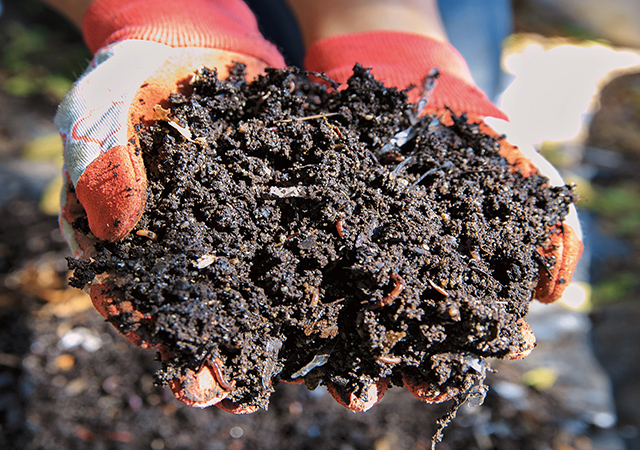
Worm Composting Bin
Level: BeginnerCost: $
Time commitment: Afternoon or less
Professionals needed: none
Dimensions: 30" x 20"
Compost, especially worm compost, is one of the most nutrient-rich composts available. It can take soil from futile to fertile and quickly give your whole yard a boost in growth and overall health. Think of worm compost as a superfood for your plants and soil. It is an easy and effective way to recycle food scraps and nourish your plants, plus it can be a great project and learning experience for the whole family.
TOOLS
- Gloves
- Garden hose or water
- Drill and 1/16" drill bit
MATERIALS
- Two 10-gallon stacking containers
- 1 coconut coir fiber block
- Handful or more of redworms (you can buy these online or at some nurseries)
- 2 shovelfuls of brown leaf litter and/or shredded paper
- 1 shovelful of greens (vegetable trimmings, lawn clippings, etc.)
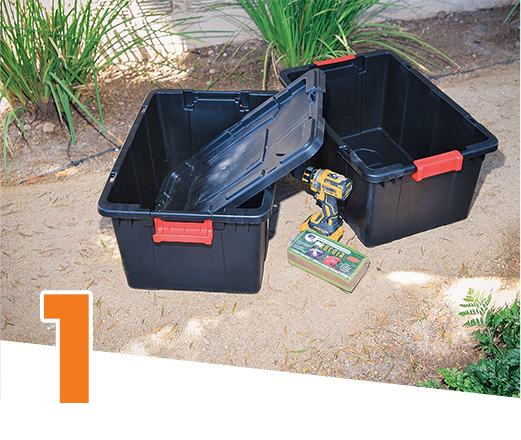
Select your containers and location: You
can use any double stacking containers
that leave minimally 1 inch of space on
the bottom when stacked. A 10- to 20-gal-
lon container is a good size. Place your
container in a shady area with indirect
light, as the sun will make it too hot for
the little critters, plus the compost will
create its own heat as it decomposes.
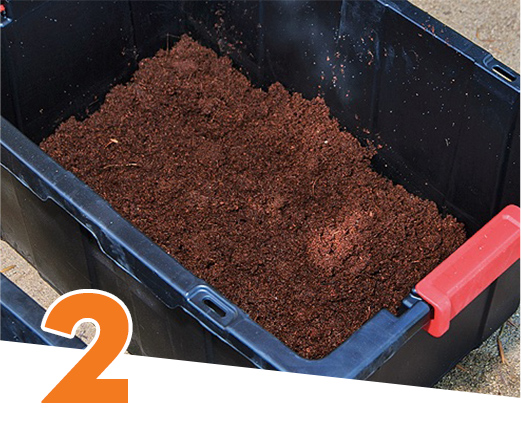
Soak the coconut coir fiber: Place the coconut
coir fiber block inside one of the containers.
Fill the container with enough water to
submerge the block. Let stand for 15 to 20
minutes, until it expands to double its size. If
you have a large container you will have to
pour out some of the excess water after it
expands, or use a smaller bucket to soak the
block and then transfer it to the large
container.
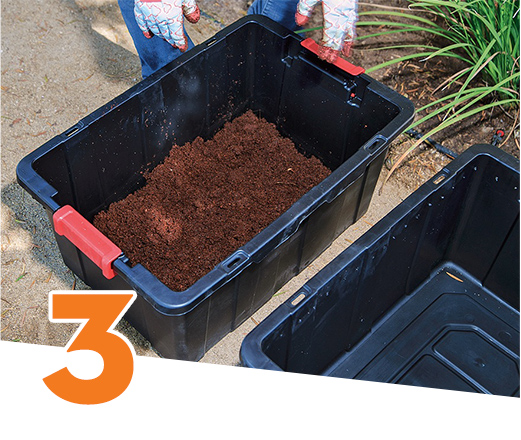
Fluff it out: Use your hands to fluff out the
coconut coir fiber to fill the bottom of the
container. It should be about as wet as a
damp sponge.
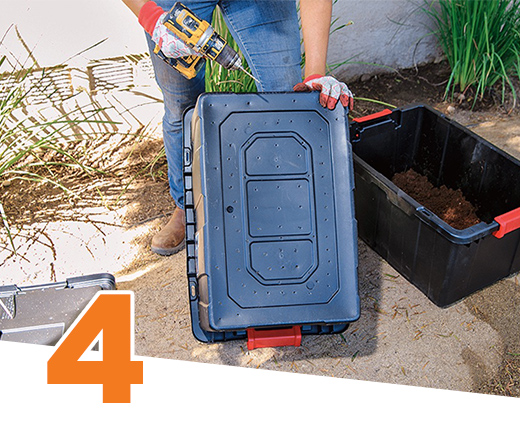
Drill air holes: With a drill and 1 ⁄16-inch drill
bit, drill holes around the top and bottom of
the other container every 1 to 2 inches.
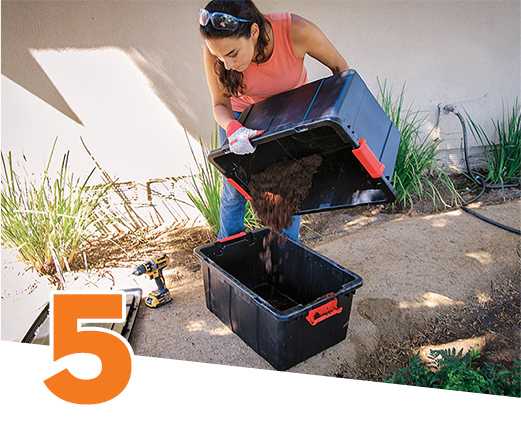
Transfer the coconut coir fiber to the container
with holes.
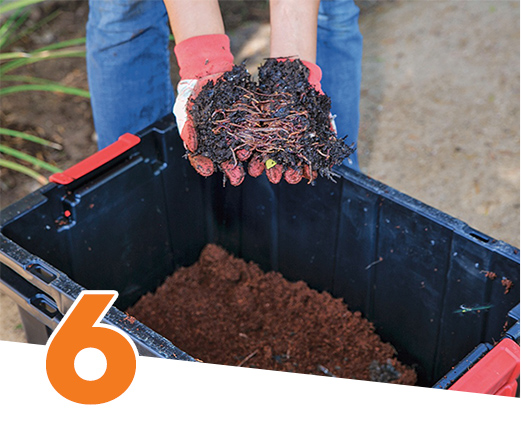
Add the worms to the container with the
coconut coir fiber.
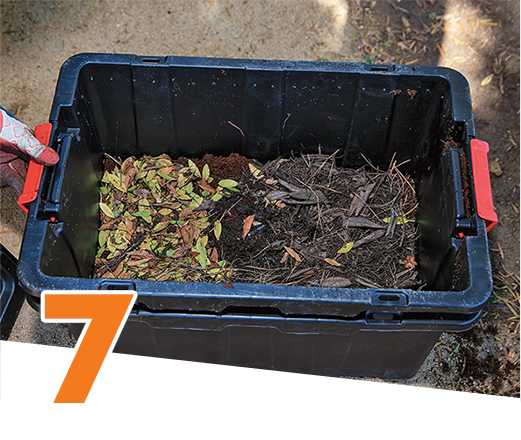
Cover the worms with a layer of brown leaves,
a layer of the greens and then another layer of
brown leaves..
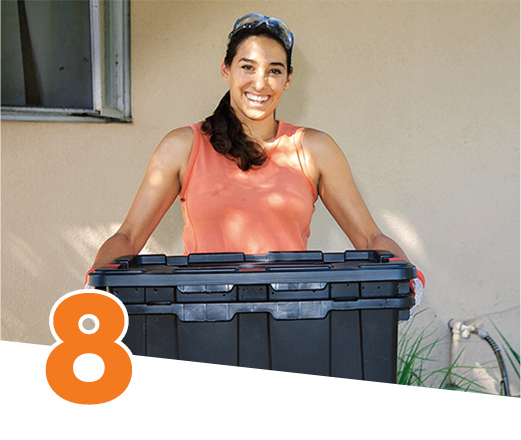
Stack the containers and feed the worms:
Stack the container with the worms on top of
the solid container and place the lid on it. Feed
the worms dried leaves, lawn cuttings and fruit
and vegetable scraps once or twice a week.
Till it into the top of the soil so it is easier to
access and will decompose better. The worms
love the leftover fiber from the juicer. If you
feed them large chunks of vegetables, it could
take a long time for them to decompose and
they might start rotting, so chop them up!
Never ever feed the worms any meat, oil or
feces of any kind, as it will bring in bacteria
that will smell bad and rot. Your worm colony
will continue to grow as long as they are happy
and well fed!
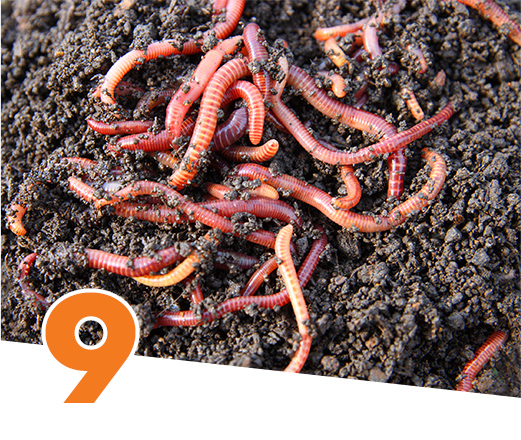
Harvest the liquid and castings: The bottom
container will catch the juices from the top
container; this worm poo juice is like liquid gold!
It’s extremely nutritious, but it’s too strong to
apply directly to your plants. Water it down with
10 parts water to 1 part worm juice; you can
dilute it up to 20 to 1. Then simply pour it around
your plants. Harvest some of the castings as
needed, picking out the worms and throwing
them back into the bin. Worm castings are
literally the worm poop. It looks like wet granules
and is distinct from unprocessed soil and
compost. Sprinkle the actual compost around
your plants and work into the soil for a healthy
garden. A little bit goes a long way.
 About the Author - Sara Bendrick
Licensed landscape contractor, author and TV personality, Sara Bendrick, is best known for her work as the host of I Hate My Yard where she tackles the tough yards of homeowners and shows them the possibilities that exist for their exterior spaces. Sara shares her passion for improving spaces through landscape design by serving as an expert source of information
Reprinted with permission from Big Impact Landscaping by Sara Bendrick, Page Street Publishing Co. 2017. Photo credit: Joe Dodd.