


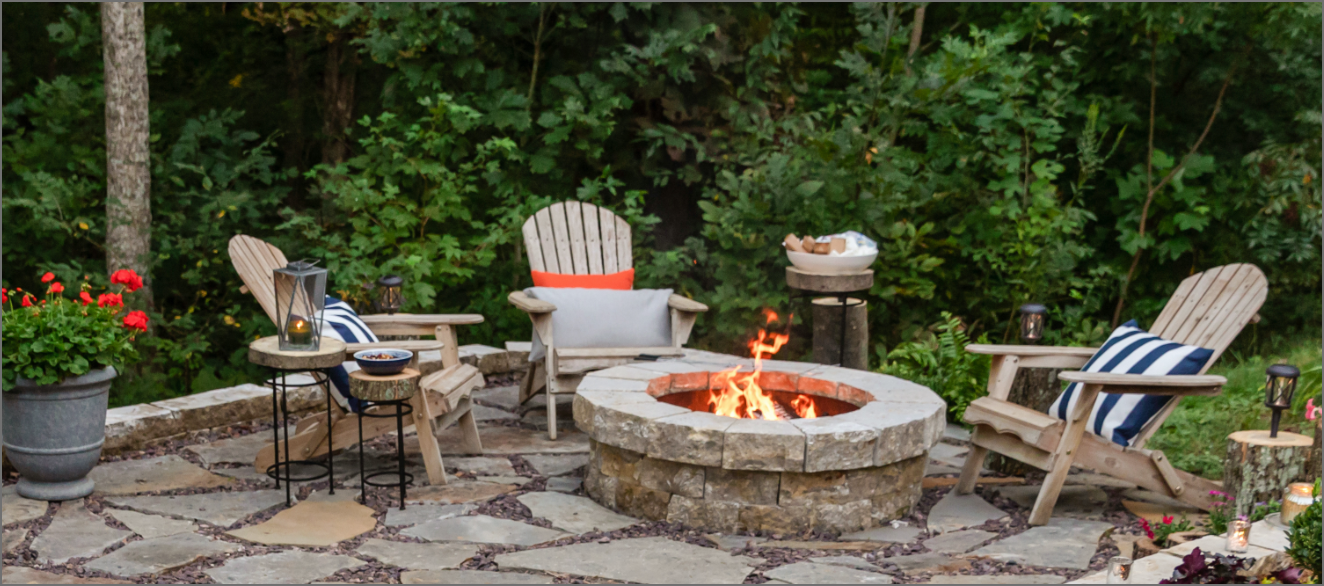
A Guide to Using, Buying and Building a Fire Pit
Fire pits are becoming more common in back yards across the country – and it’s easy to see why. They are a great way to gather friends and family for outdoor fun. Who doesn’t love a good campfire? Deciding what kind of fire pit to install, however, can be a bit daunting. This quick guide will help you determine whether to buy or build, and keep you aware of important safety considerations.
Before You Begin
The first step is to check with your homeowner’s association to determine if fire pits are allowed in your neighborhood. If you live within city limits, check local ordinances to see if fires and fire pits are permitted. If they are, ensure you follow any and all additional regulations pertaining to fire pit installation and operation.
Buying a Fire Pit
Fire pits come in many shapes, sizes and price tags. Here is a brief overview of the different types of fire pits to help you determine which type of pit is right for your property:
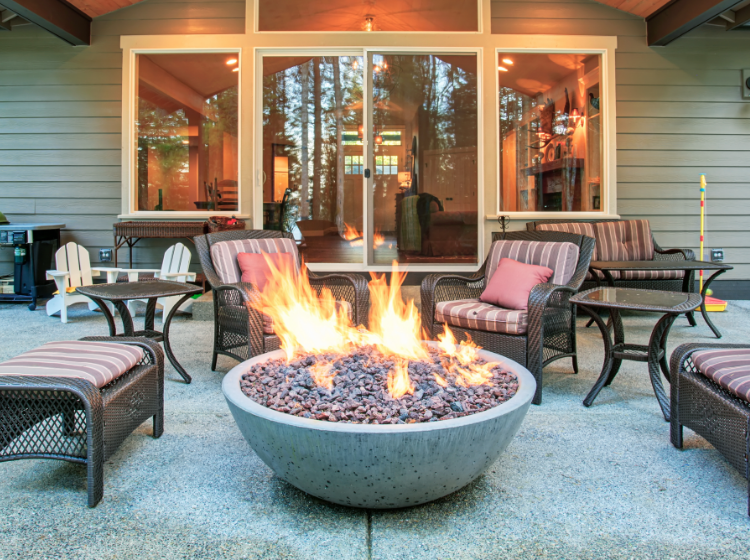
Pre-made Fire Pits
Pre-made Fire Pits are stand-alone structures you can buy and require little to no installation. There are a few notable advantages to this option. Some pre-made fire pits can be stored when not in use, freeing up more space in your yard when you’re not entertaining. They are also portable, giving you more freedom over where to have your gathering. Some pre-made pits are also powered by natural gas, meaning no logs to buy, no smoke and no ashes to clean. Gas-powered pits do require periodic cleaning, however, and propane tanks will eventually need to be filled.
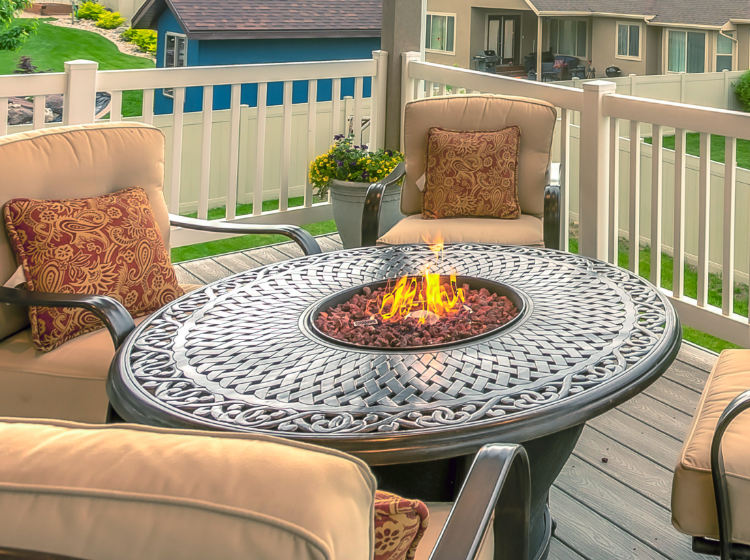
Fire Tables
Fire Tables are fire pits built into patio furniture, such as dining tables or coffee tables. They are almost exclusively gas powered and offer both convenience and warmth to your outdoor experience. They are less portable than stand-alone premade pits and will take up table space when in use. They may also require more cleaning if used around food and drink regularly. Also, consider how close the fire table will be to your house or other structures.
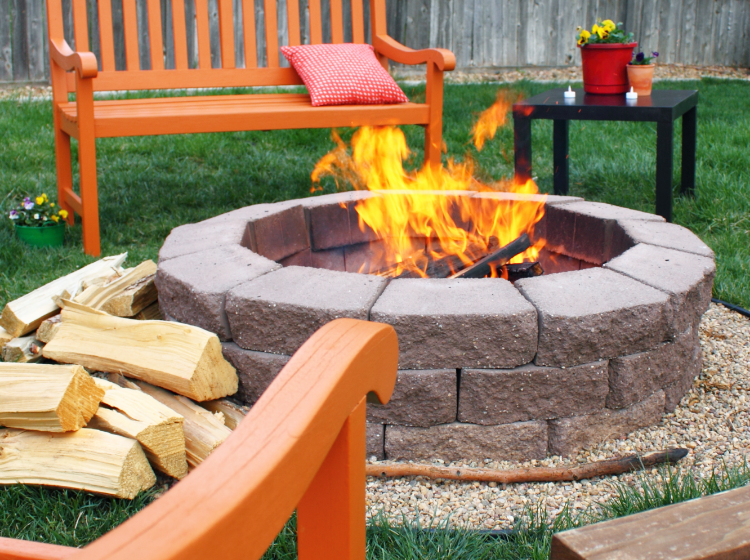
Fire Pit Kits
Fire Pit Kits are a middle ground approach between pre-made pits and total DIY custom options. They are widely available and come in a variety of styles and block types. These kits typically include pre-cut concrete or stone that you stack and glue together. The finished pits are not portable, but deliver a more professional look that can complement your existing landscaping.
DIY Fire Pit
If you are building a completely custom, DIY fire pit, your building procedure will vary considerably. We recommend you consult with a professional landscaping service for planning and installation. If you have decided to build your fire pit from a kit, here are some general considerations you will need to make:
Before Building
Before Building The first thing you will need to determine is the location of your fire pit. Ensure your location is level and at least 25 feet away from your house or any other structure. Also, avoid low hanging tree limbs. Remember to refer to any laws or ordinances in your area in case they have additional requirements. Also, do not place your fire pit close to any property lines – and think about whether blowing smoke will affect your neighbors. Finally, there will be an additional area around the fire pit required for benches or chairs, so consider this extra space when making your final decision.
Prepare the Base
Preparing the Base If you are building on an existing patio, you are already set – no preparation
required. If you are building in your yard, you will need to do some additional work to ensure a solid,
even base for your pit. First, stake the ground to mark the center of your fire pit. Tie a length of
masonry string to the string that equals half of your fire pit diameter. Pull the masonry line tight
and, with a can of marking paint in hand, walk in a circle around the stake. You should have a perfect
circle that equals the diameter of your fire pit.
Next, with shovels, remove the grass within the
circle. Next, you will need to dig a trench for your blocks. First, place your bottom layer of blocks
into your circle. Mark the inside of the blocks and remove them. You should have a new inner circle
marked on the ground. Dig out the area between the inner circle and outer circle to a depth of around 12
inches.
Next, fill your trench with about 6 inches of drainage gravel. Then, add your first layer of
blocks back on top of the gravel. Once your blocks are in place, use a level to ensure everything is
even. Now you are ready for assembly.
Assembling the Fire Pit
Assembling the Fire Pit Depending on your kit, your assembly instructions will vary. If your blocks are
dry fit, then you simply stack them together, layer after layer, ending with a layer of capstones on the
top. Be sure to stagger the joints as you assemble, ensuring greater strength and stability. If your kit
is not dry fit, it will require the use of masonry adhesive between each block layer. Refer to your
kit’s instructions for details.
Next, install your steel liner on the inside of your blocks to form an
inner wall. If your kit does not come with a steel liner, you will need to add a layer of fireproof
bricks to cover the inside of your fire pit wall. We also recommend you coat those bricks in a layer of
high-heat stove paint.
Finally, your kit may include a bowl, grate and cover that will need to be
installed on top of your fire pit walls. Refer to your kit’s instructions for details. Then, you’re all
done! Just add furniture.
Using Your Fire Pit
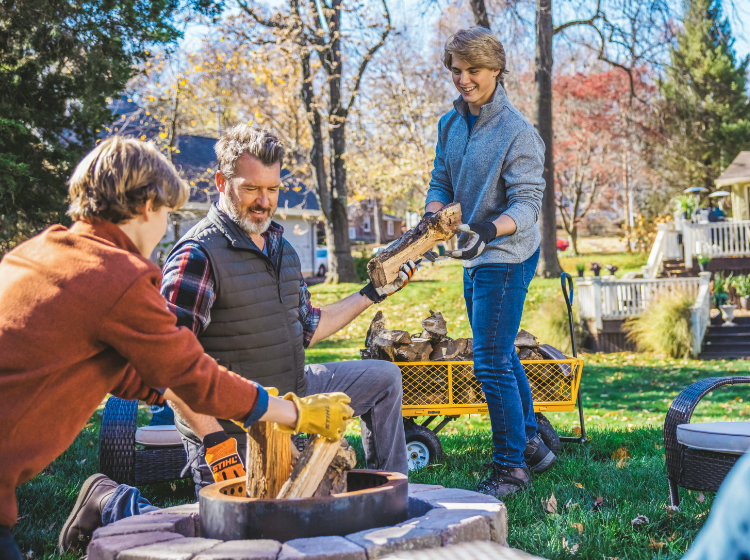
Using Your Fire Pit With your fire pit complete, it’s time to accessorize. Split-log benches are a great
way to add rustic charm to your fire pit – and a great use for your STIHL chainsaw and STIHL axes. And
speaking of wood, it is a good idea to have a well-managed woodpile to supply your fire pit.
For your safety, be sure to keep a bucket of water handy when using the fire pit – and ALWAYS extinguish
a fire
or embers at the end of your use. If you are using a propane fire pit, keep a fire extinguisher on hand
in case of an emergency.